London Heathrow Gatwick Airport Taxi Services

London Heathrow Gatwick Airport Taxi Services
Heathrow Taxi

Saturday, 2 March 2013

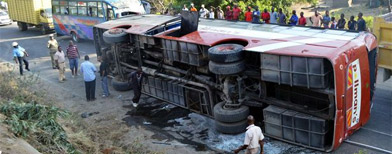
Britons Traveller Coach Crash In Kenya

The scene of the crash
 
A number of Britons were travelling on a coach which crashed in Kenya, the Foreign Office has said.
Around 15 people were believed to have been in the vehicle when the accident happened in the coastal city of Mombasa.

The number of Britons involved is not yet known. There are thought to be some injuries but they are not believed to be life-threatening. A Foreign Office spokesman said: "There has been a coach crash that we are aware of. "We believe there are British nationals involved, and there are some injuries.
"We are sending staff there now and we'll have more details later. "Indications are the injuries are not life-threatening but we won't know for certain until our people are on the scene."

Tuesday, 19 February 2013

It's Difficult To Replicate A Luxury Titanic II Liner

Titanic II To Be Constructed In China

A full-size working replica of the Titanic is to be built in China and sailed to the UK.


The Titanic


A full-size working replica of the Titanic is to be built in China following an historic agreement between an Australian entrepreneur and a Chinese shipyard who are poised to sign a deal.

Titanic II is due to be completed by 2016. She will then be sailed to the UK and prepared for her maiden voyage from Southampton to New York - a repeat of the 1912 journey which ended in disaster.
The Jinling Shipyard in Nanjing has already signed an initial agreement to build the ship with billionaire mining tycoon Clive Palmer.


Design work for the vessel, which it is claimed will precisely resemble the original Titanic, is being carried out by a consortium of companies including Norway's Deltamarin.

"It's difficult to replicate a luxury liner, but Jinling Shipyard has a history of 60 years of building various kinds of vessels with high quality," the shipyard's director, Ge Biao, told China's Xinhua news agency.

The ship will be 270 metres long and 53 metres high with nine floors and 840 rooms. It will accommodate 2,400 passengers and 900 crew members.

"The liner will be equipped with advanced technologies, including the latest life-saving and communications systems to meet the requirements of modern navigation," Jinling Shipyards spokesman Li Wenbao told the China Daily newspaper.

Representatives of Mr Palmer said on Saturday that his company had received inquiries from potential passengers around the world, with some offering up to $1m (£640,000) for a chance to be on the maiden voyage in 2016.

The original and 'unsinkable' Titanic set sail from Southampton on April 15, 1912, bound for New York City. She hit an iceberg in the Atlantic and sank, killing 1,523 passengers and crew.

The history of the voyage is well known in China because of the popularity of the 1997 film staring Leonardo DiCaprio and Kate Winslet. It was one of the first western films to be authorised for general release in China and it remains one of the top three most popular films.

Celine Dion, who sang the film's title song, became the first foreigner to perform at this year's traditional Chinese New Year Gala which is televised across the country. She chose to sing the song from the film, My Heart Will Go On.

The decision by Mr Palmer to choose a Chinese company has prompted scepticism from some about how achievable the project is and how safe the end product will be.

The issue has even been raised in Chinese government-backed newspapers.

"Frequent scandals involving shoddy products domestically and internationally have turned the term 'Made in China' into a synonym for cheap and low value-added products," an editorial in the Global Times said.
However, the newspaper argued that the Titanic II project should be a chance to prove that the 'Made in China' brand does work.

"It is indeed a challenge for China to fulfil a flawless construction mission as the world watches," the editorial said.


Monday, 4 February 2013

Spending Time (and Little Money) In London

There have been over 25 million visits to London each year, every year, since 2000. Its position as one of the most visited cities in the world may be due to the varied and entertaining nightlife, the many historical landmarks or the world-famous shows. Whatever the individual reasons for visiting though, the tourist industry in the city is worth approximately £16.6 billion, with the average overnight visitor spending around £90 per day in 2007.

With so many people travelling to the city each year, there needs to be plenty to entertain and fortunately, London is not short of things to do. With as many world-renowned landmarks and buildings, it is a city almost tailor-made for sightseeing. As it goes, the top five most-visited sites in the city, by number of visitors, are: the National Gallery; the British Museum; the London Eye; the Tate Modern; and the Tower of London.
It is interesting to know that what may well attract the many visitors is the low cost of spending in a day out; in fact, aside from something to eat, it is possible to spend nothing at all. Although the London Eye and the Tower of London both require payments to enter respectively, the latter can still be viewed free-of-charge from the outside.

Opened in 1753, the British Museum has never charged for entry. The collection of more than 7 million objects ranges from Egyptian and Greek antiques to British sculptures of Moore and Gormley. And, like London’s other museums, including the Natural History, Science, and Victoria and Albert, the main exhibitions are both fascinating and open to the general public for the majority of the year.

Furthermore, the national gallery houses one of the greatest collections of Western European painting in the world. The grade I building, enjoying a prime position in Trafalgar Square, is widely recognised as being of immense importance and houses a collection that includes Van Gough’s ‘Sunflowers’, Botticelli’s ‘Venus and Mars’ and Da Vinci’s ‘The Virgin of the Rocks’.

The Tate Modern is on the site of the former Bankside Power Station, which was originally designed by Sir Giles Gilbert Scott. The huge building is filled with modern art from around the world and is, again, mainly free-of-charge. The only possibility of spending a few pennies here is on a voluntary basis, where the museum asks for a donation to aid with continued upkeep.

When considering a visit to the city, then choosing the right option from the huge number of Londonhotels can be important. As it goes, being as central as possible is one way to see many of the important sights, but moving further away from the fast-moving areas of the city may also be preferable.

But, whatever a visitor is looking for, London is a destination that can be enjoyed on a budget as well as with a large amount to spend.
========

Daniel Collins writes on a number of topics on behalf of a digital marketing agency and a variety of clients. As such, this article is to be considered a professional piece with business interests in mind.

Saturday, 19 January 2013

Heathrow Travel chaos as snow turns to ice

Snow hits Britain (PA)
Travellers have been stuck on planes or crowded terminals after heavy snow and poor visibilty closed
 Passengers sleep on the floor at Heathrow because of overcrowding after snow and ice hit the UK.

Weather: Snow And Ice Causes Heathrow Misery

The UK's busiest airport has been forced to cut its flight schedule by 20% as the country's transport network continues to struggle with freezing weather conditions.

Heathrow Airport in west London said it was reducing the number of flights scheduled for Sunday by at least a fifth after forecasters predicted another 2-6cm of snow and low visibility in the area.

Passengers are being urged to check with their airlines before travelling to the airport - where bosses are warning weather conditions at other European airports could further decimate schedules.


Passengers at Heathrow have been facing disruption after many were stranded on planes for seven hours or forced to spend a night on the floor.

More than 100 Saturday flights have been cancelled and travellers have been complaining about check-in queues of up to two hours as staff battle to clear a backlog caused by 400 cancellations on Friday.
Elsewhere, drivers are being warned of treacherous conditions after heavy snow on Friday across much of Britain turned to ice overnight.

A young woman from Peterborough was killed in a crash involving a number of vehicles shortly after 6pm on Friday, Lincolnshire Police said.

It is not known if anyone else was injured in the accident, which happened in bad weather on the A1 at Little Ponton, near Grantham.


Humberside Fire and Rescue said seven passengers were taken to hospital after a double-decker bus collided with two cars and ploughed into a garden.

The Met Office is forecasting more snow for Sunday and has issued yellow warnings for ice for large swathes of the country and a severe red warning for South Wales, which has experienced some of the worst weather.


With more heavy snow possible on Sunday, the Highways Agency has said its fleet of snow ploughs and gritters will be out in force throughout the weekend.

Heathrow said its runways were open on Saturday with no restrictions, but services were still being disrupted following Friday's heavy snow.

Of 104 flights cancelled on Saturday, 100 were with British Airways, which has faced criticism for its handling of the disruption so far.

Husband and wife David and Janet Brindle, from Cumbria, branded BA's customer service and treatment of passengers caught up in the chaos as "appalling" and said some people had been close to tears.
The couple sat on a plane at Manchester airport from 9am until 3pm on Friday and have been stuck at Heathrow since missing their connecting flight to New Zealand.

Mrs Brindle said: "They got us off the plane but our bags weren't off. Not a single person came to tell us what was happening.

"Most people missed their connecting long-haul flights from Heathrow. We were advised to make our own way to Heathrow, so that's what we did.

"Nobody knew what they were doing. They couldn't tell us anything - they were quite rude, actually."
A British Airways spokesman said: "We have unfortunately had to make a number of cancellations today, mainly due to knock-on disruption from yesterday.

"So we've got a number of aircraft out of position and it's quite a complex operation to put that back together."

BA says it is offering customers who no longer wish to travel this weekend the chance to rebook their flight at a later date and providing refunds and overnight accommodation, or letters to make a claim, to those who could not fly.


Some passengers on British Airways flights told Sky News that they have spent up to seven hours on aircraft which have never left the runway.

Sky Reporter Clare Fallon, at Heathrow, said: "It's a surreal sight, there are hundreds of people on the floor trying to get some sleep because they are essentially stranded here. Some have told me they have been here since 11am yesterday morning.

"People feel very frustrated and stressed, and they don't understand how a relatively small amount of snow has been able to cause so much chaos."

A Gatwick spokeswoman said the airport is operating as normal on Saturday, with 505 flights scheduled and no knock-on effect from earlier bad weather.

In Northern Ireland, around 2,400 homes have been left without electricity after the severe weather caused power cuts along the east Down coast.

The Highways Agency said several motorway lanes and major A roads had closed due to the snow and ice, as well as several crashes.

Drivers have been warned to be extra careful as freezing temperatures turn the snow to treacherous ice.
The deepest snowfall has been measured at 26cm in Sennybridge, Wales, although snow has been thawing in other areas and some train services have been returning to normal.

There have also been severe hold-ups for rail passengers, with many companies cancelling services to help them cope with problems caused by the weather.

Eurostar passengers are facing delays of up to 30 minutes due to speed restrictions in France and Virgin Trains cancelled a number of services from London to Birmingham to Manchester, while others were delayed.

But while commuters have been facing misery, the winter wonderland scenes have brought joy to thousands of youngsters who got a long weekend after schools were forced to shut.

The weather has also disrupted the sporting calendar, with six football matches in League One, eight in League Two and six in Scotland postponed.

Race meetings at Ascot and Haydock have also been called off.


Heavy snow is once again expected across the North East and Scotland, while other areas will see patchier coverage.

On Sunday, between 2-5cm of snow is predicted for the South East, the Midlands, East Anglia and Lincolnshire.

Darron Burness, from the AA, said commuting in the wintry conditions was "likely to test man and machine".
Those who decide to travel have been urged to travel prepared with a fully charged mobile phone, warm waterproof clothes, boots and a blanket, some food and drink, and have a torch, ice scraper, de-icer and a shovel.

London Heathrow Taxi Cab Chauffeur

Friday, 11 January 2013

Fifth Dreamliner problem in a week

A fifth problem has been found on the Boeing plane in as many days, raising more safety fears.

An All Nippon Airways Boeing 787 Dreamliner (PA library photo) 

America's aviation watchdog has ordered a comprehensive review of the Boeing 787 Dreamliner after a spate of incidents involving the aircraft.

The head of the Federal Aviation Administration (FAA) said he is confident the Boeing 787 is safe, but he remains concerned about recent events, including a fire and a fuel leak earlier this week.
Michael Huerta, the FAA administrator, said there is nothing in the data the agency has seen to suggest the plane is not safe.

The watchdog announced it is undertaking a comprehensive review of the 787 to include "critical systems, including design, manufacture and assembly".

The manufacturer responded to fears over the plane and said: "Boeing is confident in the design and performance of the 787. It is a safe and efficient airplane that brings tremendous value to our customers and an improved flying experience to their passengers.

"The airplane has logged 50,000 hours of flight and there are more than 150 flights occurring daily."
The move by the US aviation authority was prompted after a fifth Dreamliner fault this week was reported on Friday morning.                                               London Heathrow Taxis

Oil was discovered leaking from the left engine of a Boeing 787 Dreamliner flight operated by All Nippon Airways (ANA).

An ANA spokeswoman said the leak was found after the domestic flight landed safely at Miyazaki airport in southern Japan.

It came on the same day another Japanese 787 suffered a cracked cockpit window while in flight on a domestic route.

ANA said crew noticed a spider web-like crack in a window in front of the pilot's seat about 70 minutes into Friday's flight, which was close to its destination.

The Dreamliner, the world's first carbon-composite airliner, which has a list price of \$207m (£128m), has been beset by problems this week.

The plane was designed to use power plants made by General Electric and Britain's Rolls-Royce.
On Wednesday, a domestic flight was halted by ANA because brake parts to the rear left undercarriage needed replacing, a spokesman at Yamaguchi Ube Airport said.

A Japan Air Lines (JAL) jet was also grounded at Boston Logan International airport in the US following an engine fuel leak.           London Gatwick Airport Taxis

About 40 gallons of fuel spilled from the jet that was supposed to be bound for Tokyo.
That event followed the first incident of the week, which also occurred at Boston, on Monday.
Emergency services had been called after another JAL 787 filled with smoke shortly after passengers and crew had disembarked.

Firefighters used infrared cameras to locate the fire in a battery pack in the belly of a different Boeing 787 and extinguished the blaze within 20 minutes.

Sky sources revealed that if the battery fire had occurred during a transocean flight the aircraft may have been brought down.

The 787 Dreamliner made its first commercial flight in late 2011, after a series of production delays put deliveries more than three years behind schedule.

By the end of last year, Boeing had sold 848 Dreamliners, and delivered 49. JAL and ANA operate 24 of the planes.

After the Boston events, British carriers including BA, Virgin Atlantic and Thomson Airways reaffirmed their plans to integrate 787s into fleets this year and next.

In India - where state-owned Air India has taken delivery of six Dreamliners and has more on order - a senior official at the aviation regulator said there was concern at the recent spate of 787 glitches.
Meanwhile, an Air India spokesman said the airline's debut Dreamliner flight from India to Paris on Thursday went without a hitch.


Monday, 27 August 2012

Sept. 11 changed everything — about air travel


Image: Going through security Five-year-old Frank Allocco is 37,000 feet above America, face pressed against the window.
"Cool," he says to his 6-year-old sister. "Francesca, look."
It's their first flight. They ignore a Harry Potter DVD and video games. Instead, there are rivers, mountains and tiny cars below.
Francesca chimes in: "Wow, Frank, look at that cloud."
For Frank and Francesca, soaring high above the country is magical. The kids from Park Ridge, Ill., are treated like stars. A flight attendant gives them wing pins. Mom and dad snap photos.
For most of us, though, the romance of flight is long gone — lost to Sept. 11, 2001, and hard-set memories of jets crashing into buildings.

The good ol' days We remember what it was like before. Keeping all our clothes on at security. Getting hot meals for free — even if we complained about the taste. Leg room.

Today, we feel beaten down even before reaching our seats. Shoes must be removed and all but the tiniest amounts of liquids surrendered at security checkpoints. Loved ones can no longer kiss passengers goodbye at the gate. And airlines, which have struggled ever since the day terrorists used airplanes as missiles, are adding fees, squeezing in passengers and cutting amenities to survive.
In interviews conducted during a week flying around the country — nine flights totaling 8,414 miles — many passengers expressed anger with air travel, which they said left them feeling like second-class citizens. Generally, the terrorism fears that prompted most of the changes were a distant afterthought.
"Anytime I walk into an airport, I feel like a victim," said Lexa Shafer, of Norman, Okla. "I'm sorry that we have to live this way because of bad guys."
Despite the aggravations, America's skies are busier than ever. Airlines carried 720 million passengers last year, up from 666 million in the year before the attacks.

There was little concern about terrorism even on a flight that was almost identical — same route, airline, plane type and departure time — to United Airlines Flight 93, which crashed in a Pennsylvania field on Sept. 11 after passengers fought the terrorists for control.
Instead, passengers were jockeying for position at the gate as if they were waiting for the doors to open on a day-after-Thanksgiving sale. They glanced at each other's tickets and mumbled complaints when somebody boarded before they were supposed to.


"Passengers have lost civility," said Karen McNeilly, of Gold Hill, Ore.
And it's not just the boarding process that would make Emily Post cringe.
On a flight to Houston, an oversized man stole a window seat. Why? Because in his assigned seat he would have spilled into the aisle. The rightful occupant couldn't really object since the seat-stealer was already firmly planted, tray table down, Burger King cup out.

Can't we all just get along?
It's easier now for passengers to get annoyed with each other. We're simply getting packed in more tightly by airlines that are reining in costs more than they ever did before the terror attacks.
A decade ago, an average of 72 percent of seats per flight were occupied. Today, 82 percent are. Passengers once had a shot at an empty middle seat. Now that rarely happens. Airlines have added rows, meaning less leg room. Smaller, regional planes now carry a quarter of all passengers, twice that of a decade ago.
"It is a dismal experience that you simply put up with because you have to get from point A to point B. It used to be the part of the trip you looked forward to," said Virgin America CEO David Cush. "As an industry, we've found a way to beat that joy of flying out of people."

In another effort to balance their books, airlines have added fees for once-free services. Last year, $8.1 billion in fees were collected, more than three times the $2.5 billion collected before the attacks, adjusted for inflation.

Checked-luggage fees accounted for $3.4 billion of the 2010 total. Without them, major airlines would have lost money last year rather than reporting a combined $2.6 billion in profits.
It's no wonder that for shorter trips, Americans now avoid flying. New inter-city buses have popped up and Amtrak now carries 37 percent more riders than a decade ago. Buses and trains don't have the security checkpoints that make it necessary for air passengers to arrive at the airport about an hour before domestic flights and two hours in advance for trips out of the U.S.

The days of arriving minutes before a flight are a distant memory, and lines are inconsistent. While one Transportation Security Administration checkpoint took four minutes to clear, another involved a 27-minute wait.
Frequent fliers know the ever-changing set of security rules. Most others don't.

Safe, or just feeling safe? Some people worry about radiation-emitting, modesty-eroding full-body scanners, although their use is still

Monday, 11 June 2012

Budget New York


Budget New York


By Amanda Statham
New York’s one of the top cities in the world for fashion, nightlife and sightseeing, but it’s also on the pricey side. However, it’s perfectly possible to visit the Big Apple and not break the bank - you just need to know where to go.

Copyright Rex
Shop around
If you’re after high-end goodies but don’t want to pay high-end prices, hit the concession and discount stores. For bargain dresses, make a beeline for Dress Barn (747 Third Avenue). Don’t be put off by some of the gaudy goods on offer, hunt around and you’ll discover some choice pieces; I picked up two Calvin Klein dresses for under $100, a fraction of their normal price.
For chic-but-cheap designer tops, trousers and lingerie, Daffys (426 Broadway and several other locations around the city) is unbeatable. You may have to root around for the good stuff, but the rewards are great with T-shirts from as little as $5.
New Yorkers bag a bargain at Century 21 (22 Cortlandt Street) where there’s up to 65 per cent off everything from adult and children’s clothing to homewares. Arrive early morning or mid-afternoon to avoid the lunchtime crush.
The Big Apple is top of the tree when it comes to vintage and my in-the-know second-hand store isCheap Jacks (303 5th Avenue), where stylists, designers and celebs all pop in for a bit of inspiration. You can pick up quality goodies like sunglasses from the 50s or an 80s suede jacket for tens rather than hundreds of dollars.
Finally, browse bric-a-brac bargains at the Hell’s Kitchen Flea Market (39th Street between 9th and 10th Avenues), which runs every weekend and is lined with stalls selling everything from vintage clothing and pottery to jewellery and art.
See the sights
The Staten Island Ferry is probably the best sightseeing bargain in the world: it’s free, passes close to the Statue of Liberty and offers amazing views of the city skyline. Twenty million people per year take the 25-minute cruise from Battery Park, Lower Manhattan, to St George on Staten Island, which runs 24 hours a day, seven days a week.
Invest in a CityPASS, $89, which gives you up to 50 per cent off entry fees to six must-see attractions, lets you jump the queues and provides extras such as a free audio tour of the Empire State Building.
Cheap eats
You don’t have to pay the earth for award-winning food in Manhattan. Take the 6 train to 77th Street in Brooklyn and treat yourselves to some slices of pizza at Totonno’s Pizzeria Napolitano (1524 Neptune Avenue). It opened in 1924, is cheap as chips and still serving the best pizzas in town in 2012 according to Zagat judges.
A picnic in Central Park is a must-do when the sun shines. Grab some gourmet goodies from the basement Wholefood Market in the Time Warner Center (10 Colombus Circle), then cross the road and enter the park at its southwest corner, where there’s plenty of grass to chill on.
If you want to cut down on the lbs as well as dollars, visit the Better Burger NYC (178 8th Avenue) which serves up delicious low-fat, 100 per cent organic, hormone-free turkey, chicken and veggie burgers until 11pm.
For a tasty-but-cheap lunch stop, drop by Calexico, a mobile cart selling delicious Mexican food where Broadway meets 5th Avenue opposite Madison Square Park. For great value Mexican in the evening, like chili con carne or quesadilla for $9 each, book a table at Arriba Arriba! (762 9th Avenue). Live DJs keep the experience upbeat as do killer cocktails – don’t miss the frozen margaritas, which come in three sizes, bebe, mama and papa.
Finally, my best free food find is the new Crocodile Lounge (325 East 14th Street), a funky East Village bar covered in, you’ve guessed it, crocodiles – even the door handles are croc – which gives away a pizza with every beer you buy.
Bargain entertainment
New York’s famous for its jazz scene, but going to a legendary club like Iridium or Blue Note can set you back $30 before you’ve even had a drink. For a sophisticated evening with a background of smooth jazz for less, go to an off-the-beaten-track venue like the Cornelia Street Café (29 Cornelia Street). Ditto the Zinc Bar (83 West 3rd Street), one of the most intimate places in town to enjoy live jazz, funk, blues and world music until 3am at weekends. If you don’t have big bucks to spend on a Broadway show it’s possible to get 25 to 50 per cent off ticket prices from one of the Theater Development Fund’s ticket booths. There’s one in Times Square which gets very busy, so head instead for the less crowded Downtown booth in South Street Seaport (199 Water Street), where you can queue for same-day evening performances from 11am–6pm.
Where to stay
Apple Core runs five hotels in amazing Midtown locations from just $190 a night. They aren’t going to win any design awards, but the extras are way better than you’d expect for the price, such as free continental breakfast, WiFi and US telephone calls. In-room facilities include cable television, pay-per-view movies, coffee makers and modern bathrooms with marble units and hairdryers. Unsurprisingly, occupancy rates are high, so book early. Alternatively, consider opting for an apartment. HouseTrip is a great new website where native New Yorkers rent out their flats, meaning you get to live like a local and pay less than a hotel room for the privilege. There’s lots of choice, from compact one-bedroom apartments in the Upper East Side through to palatial pads in Midtown.

London Airport Heathrow - GatwickTaxi - Chauffeur Services Posts